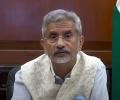
The external affairs minister said the broad principle around which his position would be constructed would be about the importance of maintaining peace and tranquility along the border for the overall development of ties which has been reflected in the last 30 years of the relationship.

The Jaishankar-Wang talks came amid the dragging border row in eastern Ladakh that entered its fifth year in May.
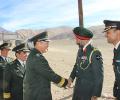
Amidst reports of Chinese incursions, the Peoples Liberation Army and the Indian Army on Sunday decided to uphold treaties and agreements signed between the governments of the two sides to maintain peace and tranquility along the Line of Actual Control.

China on Wednesday said it was opposed to the joint Indo-US military exercises being held near the Line of Actual Control (LAC), asserting that it violates the spirit of the two border agreements signed between New Delhi and Beijing.
He said that the two nations will have issues in the foreseeable future. However, there are ways of addressing those issues and what happened in 2020 was not the way to address those issues.

Talking about the expectations from India, Jaishankar said that there are lots of expectations as New Delhi is seen as the one that solves problems.

The border personal meeting was marked by saluting the national flags by both the delegations members.
The officials said the focus of the talks was on 'full and enduring restoration of peace and tranquillity' along the border and also better coordination to ensure avoidance of such incidents in future.

The move comes amid reports in a section of media that claimed that Chinese soldiers had displayed their flag in the region a few days ago.
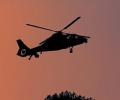
The PLA choppers violated Indian airspace in the Chumar sector on July 11 around 0800 hours and returned after flying for some time there, sources said.
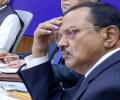
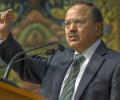
National Security Advisor Ajit Doval arrived in Beijing on Tuesday to take part in the India-China Special Representatives' talks to be held on Wednesday aimed at restoring the bilateral ties stalled for over four years' due to the military standoff in eastern Ladakh.

Prime Minister Modi and President Xi held the conversation on Wednesday on the sidelines of the BRICS (Brazil, Russia, India, China, South Africa) summit in Johannesburg.

Jaishankar said the basis for the overall growth of the relationship between the two countries was peace .

Without mentioning the boundary dispute, the spokesperson said that China-India relations have been stable on the whole and "our two sides have maintained dialogue and communication at various levels".

Tan said that China has always stressed that military cooperation of relevant countries, especially on exercises and training activities, should not be targeted at any third party, but rather serve to help maintain regional peace and stability.

It was for the first time that the high-level military talks on the lingering border row spanned two days.
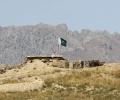
Pakistani troops violated the ceasefire along the Line of Control in Kashmir on the morning of the 65th Republic Day by resorting to unprovoked firing for three hours, army said.

China on Thursday said the meeting between Prime Minister Narendra Modi and Chinese President Xi Jinping in Russia's Kazan on Wednesday carries a "great significance" as they reached an "important common understandings" to improve the bilateral ties.

In its annual threat assessment presented before the Senate Armed Services Committee during a Congressional hearing on Tuesday, the US intelligence community said the expanded military posture by both India and China along the disputed border elevates the risk of armed confrontation between the two nuclear powers that might involve direct threats to US persons and interests and calls for America's intervention.
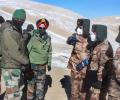
Sources said the Indian troops resolutely confronted the Chinese PLA soldiers.
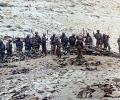
Sources said the Chinese had come heavily prepared but did not expect the Indian side to be well prepared.
China's national legislature -- the National People's Congress (NPC) -- on October 23 adopted the new law on the protection and exploitation of the land border areas which drew sharp reaction from India as it was passed amid the protracted military standoff between the two sides in eastern Ladakh region.
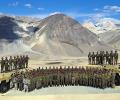
If China is accommodating regarding Depsang and Demchok, a resolution of the Sino-India territorial dispute in Eastern Ladakh could be possible.
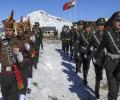
India and China held two days of military talks in an "open and constructive manner" for an early and mutually acceptable resolution of the remaining issues along the Line of Actual Control in eastern Ladakh and agreed to maintain peace on the ground.
'The two sides should support rather than undermine each other, strengthen cooperation rather than guard against each other, and enhance mutual trust rather than be suspicious of each other'

India has not yet received any confirmation on Chinese President Xi Jinping's in-person participation at the upcoming G20 summit, people familiar with the matter said on Thursday amid reports that he is likely skip the conclave.

Relations between India and China have been in an 'abnormal state' since the 2020 Galwan clash and it is a 'possibly longer than medium-term issue', External Affairs Minister S Jaishankar said in New York.
There was no official word on the outcome of the talks.
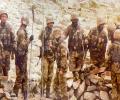
External Affairs Minister S Jaishankar said on Wednesday China has given India 'five differing explanations' for deploying large forces at the Line of Actual Control (LAC), adding this violation of bilateral pacts has 'very significantly damaged' their relationship that is now at its 'most difficult phase' in the last 30-40 years.
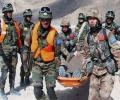
'For the moment in Eastern Ladakh, it is unlikely there will be any more escalation of this conflict,' observes Colonel S Dinny (retd) who served as Commanding Officer of an infantry battalion deployed in the Pangong Tso area.

The former Army Chief said India's relations with China will always remain "somewhat tense".
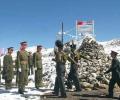
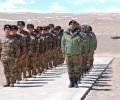
The Indian delegation led by Lt General Harinder Singh, the general officer commanding of Leh-based 14 Corps, and Commander of the Tibet Military District Maj Gen Liu Lin held an extensive meeting in Maldo on the Chinese side of the Line of Actual Control in eastern Ladakh on Saturday that began at around 11.30 am and went on till evening.
The MEA said the two sides agreed to continue discussions through diplomatic and military channels to resolve the remaining issues "at the earliest" so as to create conditions for the restoration of normalcy in the bilateral relations.

India and China will complete the disengagement process in the Gogra-Hotsprings area in eastern Ladakh by September 12, the External Affairs Ministry said on Friday.

Prime Minister Narendra Modi and Chinese President Xi Jinping shook hands on Tuesday at a side event at the G20 Summit in Bali, a gesture drawing some attention because of the strained relations between the two countries over a border clash two years back.
In the fresh round of talks, the Indian side is expected to press for disengagement of troops as soon as possible in all the remaining friction points besides seeking resolution of issues in Depsang Bulge and Demchok.
India and China on Tuesday agreed to hold the next round of the Senior Commanders meeting at an early date to achieve complete disengagement from all friction points in eastern Ladakh to create conditions for the restoration of normalcy in bilateral ties.

The situation along the Line of Actual Control (LAC) in eastern Ladakh is stable but sensitive and not normal, Chief of Army Staff General Upendra Dwivedi said on Tuesday on the dragging military standoff between China and India in the region.
The 11th round of the Corps Commander-level talks began at around 10.30 am at the Chushul border point on the Indian side of the Line of Actual Control (LAC) in eastern Ladakh, they said.
Jaishankar said China, in violation of the 1993 and 1996 agreements not to mass troops on the Line of Actual Control, chose to do so, and added that its attempt was obviously to unilaterally change the LAC.
